If you don’t build an emotional connection with your guest, another hotel will. The harsh truth in hospitality is that basic comfort is just that: basic (and interchangeable!). Setting your hotel apart from the rest means going beyond these foundational expectations.
By making guest satisfaction management in hotels a priority, you build trust, loyalty and gratification. Here’s how forward-thinking hotel teams embrace data, personalization and technology to raise the bar on satisfaction.
Key Takeaways
Hotel guest satisfaction management is the practice of tracking, analyzing and improving guest expectations and experiences across every stage of the stay.
Guest satisfaction is driven by relative performance, not perfection.
Hotels must measure sentiment before, during and after the stay to identify expectation gaps, operational friction and opportunities for personalization.
Platforms like Canary Technologies manage guest satisfaction at scale by exceeding expectations without sacrificing human connection.
What Is Hotel Guest Satisfaction?
Hotel guest satisfaction measures how effectively a hotel meets or exceeds a guest’s expectations across every touchpoint.
Customer satisfaction may seem deceptively easy to measure, but it can be nuanced. For instance, just because you met high standards of cleanliness doesn’t mean your guest was satisfied with their overall stay. There are several reasons it can be difficult to know how guests truly feel:
Feedback surveys don’t capture expectations
Cultural bias makes satisfaction different for each guest
Guest expectations and satisfaction evolve over time
What Are the Top Factors Influencing Guest Satisfaction?
Guest satisfaction is influenced by a hotel’s timeliness, responsiveness, personalized service, cleanliness, convenience and professionalism throughout the stay. Modern hotel experiences are a blend of human warmth and digital ease, where even the smallest details can shape a guest’s overall impression.
Guests pay attention to things like:
Your hotel’s communication and responsiveness: The way you communicate with guests should be quick, clear and consistent. This keeps guests informed and reduces friction both before and during their stay.
Your staff’s attitude and professionalism: Friendly, well-trained staff who anticipate needs and handle requests with care leave the strongest impression. Professionalism and empathy go hand-in-hand when it comes to exceeding service expectations.
The personal touches in your service: Tailoring the experiences to each individual guest, like remembering room preferences or celebrating special occasions, makes a significant impact on guest satisfaction — and repeat booking rates will benefit, too.
Your hotel’s cleanliness and comfort: Spotless rooms, fresh linens and thoughtful amenities are visual cues that communicate care and professionalism. Guests associate these with your hotel’s overall attention to detail, making them vital to satisfaction.
The technology and convenience found at your property: Technology streamlines the stay and gives guests more control. Tools that reduce wait times or automate service requests enhance convenience and satisfaction.
Why Hotel Guest Satisfaction Management Is Critical
Loyalty points may encourage stays with your brand, but they don’t guarantee it. Even the most devoted points warriors will disengage with a property when their expectations aren’t met or exceeded. On the other hand, a warm greeting, a room set to your preferences and personalized options from a hotel concierge? These are the things that keep people coming back again and again.
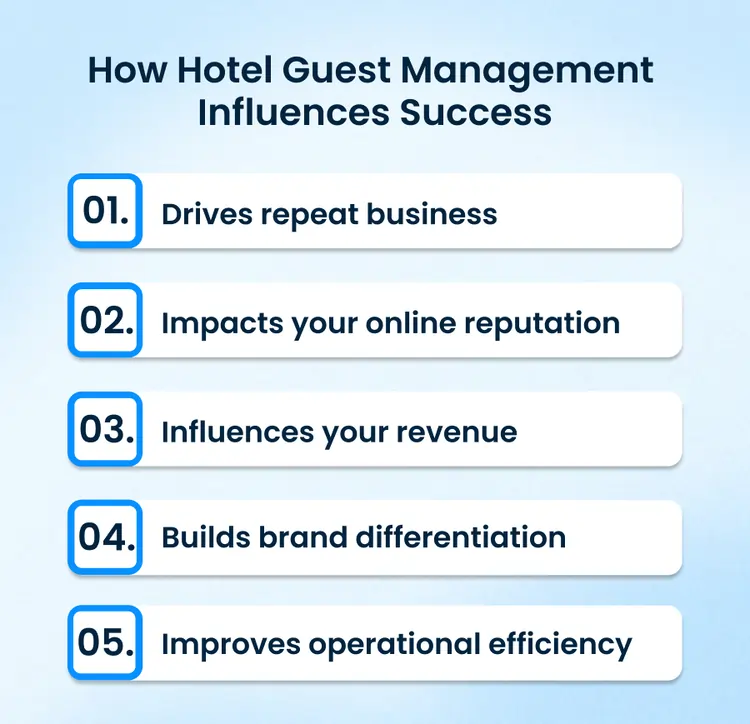
When your hotel actively aims for high satisfaction, it encourages repeat bookings and turns guest sentiment into actionable intelligence. Feelings turn into insights, and insights drive smarter operational decisions. Here are the key reasons guest satisfaction management is so critical and how your hotel can turn insight into impact.
Drives Repeat Business
When guests feel seen, heard and appreciated, they come back and they spread the word. High customer satisfaction builds emotional loyalty that goes beyond points, pricing or location.
Having repeat business means:
Lower OTA expenses due to loyal customers who make direct reservations
More upsell opportunities based on guests’ previous purchases
Word-of-mouth referrals regarding personalized service and consistent experiences
Impacts Online Reputation
There is power in the review. Today’s guests are forthcoming about how their stay went. A single guest’s digital footprint can influence hundreds (if not thousands!) of future bookings, whether it’s through public reviews or private social media posts.
Reputation management now means consistently managing guest satisfaction on the web. It protects and elevates your online presence so that past guests are taken care of, and prospective guests are reassured of your hotel’s commitment to excellence.
Higher guest satisfaction:
Drives review scores on platforms like Google and Tripadvisor
Increases Net Promoter Score by up to 28 points, according to McKinsey
Fosters loyalty and encourages guests to return and recommend the property to others
Influences Revenue Performance
Satisfied guests spend more and have a reduced price sensitivity. When a hotel earns trust by delivering a frictionless experience, those guests are far more likely to deepen their engagement and spend on various services and amenities they might not have otherwise.
Having satisfied guests:
Provides more opportunities for upsells and enhancements
Leads to more tips for staff members and higher spending on services
Gives insight into strategies for pricing, service tiers and staff resourcing
Builds Brand Differentiation
What transforms a hotel from a place to sleep into an unforgettable stay? Emotional impact. Guests may forget the furniture or not recall the color of the hallway, but they’ll always remember how they felt during their stay. And the best way to make that feeling a positive one is by prioritizing guest satisfaction management. Some ways to differentiate your hotel include:
Offering seamless digital convenience like mobile check-in and guest messaging
Showing above-and-beyond hospitality such as welcome gifts, handwritten notes and personalized recommendations
Connecting to your local community and incorporating them into the guests’ stay
Supports Operational Improvement
Guest satisfaction doesn’t stop at marketing and reputation — it also fuels better operations. By tracking trends and recurring issues, hotel teams can fine-tune workflows and staff training to meet evolving guest needs and expectations.
By monitoring your feedback, you can:
Pinpoint process breakdowns or service gaps
Highlight what’s having a positive impact on the guest journey
Allows managers to intervene before problems escalate
How to Measure Hotel Guest Satisfaction
Modern technology lets hotels track guest sentiment before, during and after the stay, making it easier to see when and how experiences and expectations align or fall flat. But understanding this data starts with gathering reliable measurements.
Surveys are essential, but we now have smarter tools for monitoring satisfaction and evaluating guest ratings in real time across touchpoints. Here are some tools you can use that measure hotel guest satisfaction:
Ways to Measure Hotel Guest Experience
How the Methods Work
Guest Surveys and Feedback Forms
Collect structured insights after check-out via email/text using questions about cleanliness, service and likelihood to return.
Online Review Monitoring
Monitor and analyze public feedback on platforms like Google, Tripadvisor and OTA sites to identify trends and respond with care.
Social Listening Tools
Track guest mentions across social media platforms to uncover unfiltered opinions and emerging issues mid-stay.
In-Stay Feedback Mechanisms
Use real-time tools, such as mobile check-in surveys or in-stay messaging, to gauge satisfaction during the stay.
Staff Feedback Loops
Tap into your front desk and housekeeping teams for first-hand insights about guest behavior and concerns.
Benchmarking and Analytics
Compare guest satisfaction scores to internal KPIs or industry benchmarks to identify where your property stands.
No single method paints the full picture. If you’re wondering how to increase guest satisfaction in hotels, the most accurate and effective view comes from layering multiple approaches that include real-time and post-stay feedback.
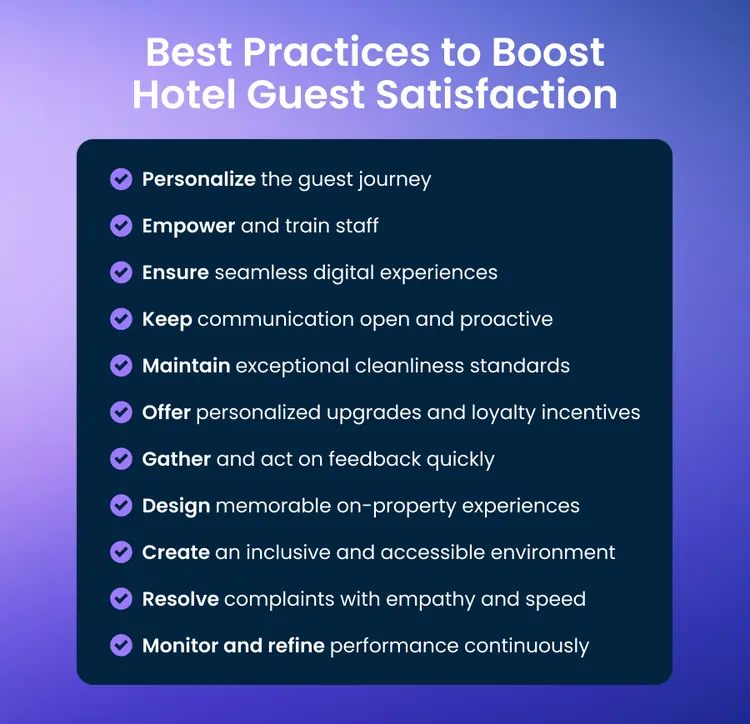
How to Improve Hotel Guest Satisfaction: 11 Best Practices
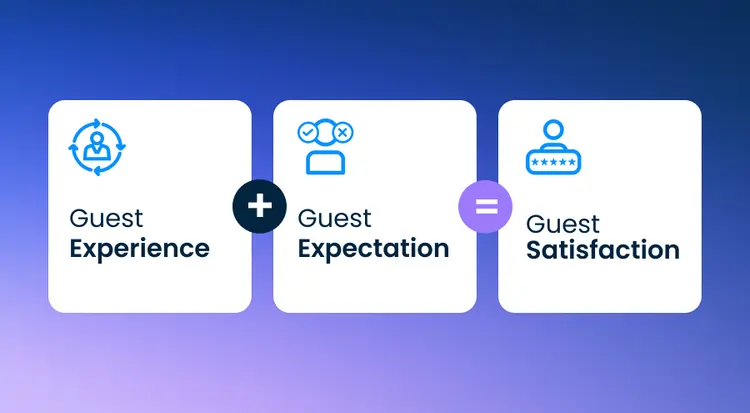
Understanding how to improve guest satisfaction for hotels means proactively manage two things: guest expectations and guest experiences.
Here are 11 best practices that will level up your hotel’s guest satisfaction.
1. Personalize the Guest Journey
An email from noreply@hotel.com doesn’t exactly say “connection.” Personalized messages are a low-effort way to create tailored experiences that make guests feel valued. Travelers who rate the level of personalization they experienced at a hotel between 9 and 10 (on a scale of 10) are far more likely to report their overall satisfaction as high, according to the research company Medallia. And with only 23% of surveyed guests reporting they experienced high levels of personalization in the same study, the opportunity remains huge.
Tools like Canary’s AI Guest Messaging make it easy to tailor direct communication at scale, from confirming details to suggesting local recommendations.
How to implement:
Use guest profiles and CRM data to anticipate preferences and influence suggestions.
Send pre-arrival messages that welcome, engage and respond at scale.
Offer tailored in-stay suggestions via messaging platforms.
2. Empower and Train Staff
Your team is the face of your hotel’s fulfillment of guest expectations. A well-trained, confident staff delivers better service. They’re often more skilled at managing expectations (“If you like a quieter breakfast time, I recommend 8:30 a.m. — it gets busy later on Saturdays”), and solve problems faster.
Empowering employees to take initiative beyond a script results in more authentic, high-touch interactions.
How to implement:
Lead by example and create a culture of sharing anecdotes of great service in the hotel amongst staff.
Encourage staff to resolve minor issues without manager approval.
Celebrate team wins tied to positive hotel guest feedback, thereby training others on good examples.
3. Ensure Seamless Digital Experiences
Hoteliers often think of the digital experience as their website and booking engine, but modern hotel stays contain digital elements throughout the entire process.
Guests want control, speed and flexibility from their hotel experience. From Canary’s Mobile Check-In to Canary’s Mobile Keys, tech should make every step easier for your guests and your team.
How to implement:
Provide mobile access to check-in, keys and payments.
Use automation to handle repetitive guest queries.
Train staff so they can handle any questions on digital tools confidently.
4. Keep Communication Open and Proactive
It’s easy to drop the ball on communication after check-in. But being available and responsive throughout a guest’s stay is the way to continuously have a finger on the pulse of expectation and experience.
With tools like Canary AI, hotels can proactively solve issues before they escalate.
Offer 24/7 support using AI-powered replies for FAQs
5. Maintain Exceptional Cleanliness Standards
Nothing kills guest experience faster than discovering evidence that their room was previously occupied by somebody else. It’s the number one motivating factor to leave a positive or negative review, according to a 2024 study by Ecolab Hotel. And for hoteliers, finding a review about substandard cleaning is a thing of nightmares.
Maintaining exceptional standards (though it should be anything but an exception) is about eliminating the chance that something may get missed and instilling a sense of ownership and pride in your housekeeping team.
How to implement:
Use checklists and digital logs to track room cleaning.
Conduct regular spot checks in high-traffic areas.
Award bonuses for days without issues flagged by guests or staff.
6. Offer Personalized Upgrades and Loyalty Incentives
Guests love perks, so smart offers can drive both revenue and satisfaction. Tailored upgrades and loyalty rewards make travelers feel appreciated, while tools like Canary’s Dynamic Upsells automate delivery based on guest preferences.
How to implement:
Use booking data to trigger upgrade offers pre-arrival.
Highlight exclusive perks for returning guests.
Include free offers to engage even new guests from the start.
7. Gather and Act on Feedback Quickly
If feedback collects dust before you view or act on it, you’re doing it wrong. Guest satisfaction management means being proactive. Whether it’s praise or a complaint, giving guests a quick response shows that their voice matters.
How to implement:
Send short surveys after check-in and check-out.
Monitor responses multiple times a day and respond as needed.
Use feedback trends to identify training or process gaps.
8. Design Memorable On-Property Experiences
Surpassing expectations creates satisfaction, and crafting special moments on property will do just that. It’s the most memorable way to show guests that you care about how they feel when they stay with you.
In his book “Unreasonable Hospitality,” Will Guidara puts it bluntly: “No one who ever changed the game did so by being reasonable.”
How to implement:
Offer welcome drinks or a farewell amenity.
Leave handwritten notes for special occasions or repeat stays.
Include a surprise dessert during a guest’s last dinner.
9. Create an Inclusive and Accessible Environment
Guest satisfaction suffers when hotels design for “the average guest.” True hospitality anticipates differences and customizes the experience accordingly.
Creating an inclusive and accessible environment means ensuring every guest, regardless of ability, background, language or identity, feels comfortable, respected and able to fully enjoy their stay. When inclusion is intentional, trust grows — and so does your guest satisfaction.
How to implement:
Ensure ADA compliance and clearly communicate accessibility features on your website and booking profiles.
Train staff on inclusive service and cultural sensitivity.
When expectation and experience don’t match up, how you handle the situation defines your service quality. In terms of speed and empathy, a resolution should meet or exceed what guests anticipate — otherwise it's just another flaw that lowers guest satisfaction.
Fast, empathetic responses turn frustration into trust, reflecting optimal service recovery and high brand values.
How to implement:
Empower front desk staff to provide service recoveries on the spot.
Train teams to listen first, without defensiveness, then act.
Use tech, such as AI communication, to instantly escalate issues to the right manager.
11. Monitor and Refine Performance Continuously
Guest expectations evolve, even while you’re hitting all your internal performance goals. By regularly analyzing satisfaction data, you know what’s working and what needs adjustment to stay ahead of the curve.
How to implement:
Review guest satisfaction metrics weekly.
Read reviews of competitor hotels you aspire to be like for inspiration.
Include your team in any updates, clearly communicating why a change is taking place.
Enhance Guest Satisfaction with AI-Powered Solutions from Canary
To exceed at guest satisfaction management in hotels, you need smart, scalable tools that work behind the scenes to reduce friction. Canary AI makes it easier than ever to boost hotel guest satisfaction by empowering hotel teams to communicate faster, resolve issues proactively and personalize every touchpoint.
Trusted by more than 20,000 hoteliers in over 100 countries, Canary helps properties of all sizes turn satisfied guests into loyal advocates. Whether it’s automating guest messaging, translating service requests or flagging urgent concerns, hotels exceed expectations at every stage of the guest journey with Canary’s AI-driven solutions.
Key Features of Canary AI:
Instant smart replies: Respond to common guest questions in seconds with customizable, AI-powered replies
Auto-translation: Seamlessly communicate with international guests using real-time translation in over 30 languages
Escalation detection: Flag urgent messages that require manager attention, ensuring no request gets missed
Sentiment analysis: Understand guest tone to prioritize follow-up and recovery before issues turn into complaints
24/7 availability: Stay responsive around the clock, even when only a small overnight team is on-site
Frequently Asked Questions
How can you make your guests happy and satisfied during their stay?
Focus on consistency, personalization and understanding, while guiding expectations through clear communication.
Small touches, like remembering preferences, using guest messaging and offering quick problem resolution, go a long way toward delighting guests.
How does guest satisfaction impact hotel reviews?
Guest satisfaction directly influences hotel reviews. When guests have a positive experience, they’re more likely to leave high ratings and thoughtful feedback on platforms like Tripadvisor and Google. These positive reviews improve your ranking, increase trust with potential guests and drive more bookings.
On the other hand, if a stay falls short and the guest feels unheard, they’re far more likely to leave negative feedback. That’s why consistently delivering excellent service and addressing issues in real time isn’t just good hospitality — it’s essential for maintaining strong reviews and long-term revenue growth.
What are the most effective ways to measure guest satisfaction in hotels?
A combination of guest surveys, in-stay feedback, online review monitoring and staff insights offers the clearest picture of guest sentiment.
Benchmarking against competitors also reveals areas for growth and improvements you may not have thought of.
How can technology help improve guest satisfaction?
Technology streamlines the guest experience and frees up staff to focus on service. By automating the routine tasks, it provides more time for hotel teams to genuinely connect with guests.
Tools like digital check-in, AI messaging and real-time feedback systems make it easier to meet and exceed guest expectations.