To make it in 2026, hotels have to make their revenue go farther than ever. Last year in the U.S, average wages for hotel workers climbed between 3.7 percent and 5.9 percent year-over-year, while labor cost per occupied room climbed 2 percent to 11.2 percent. As labor costs rise, guest expectations climb and market dynamics shift — meaning relying solely on room bookings is no longer enough.
From attracting higher-value demand to unlocking new revenue streams across meetings, events and on-property experiences, let’s explore how to increase hotel revenue using proven tactics designed to drive bookings and enhance guest experience.
Key Takeaways
Hotel revenue includes all income generated by a property, including room rates, add-ons and amenities.
Dynamic pricing, upsell strategies and guest personalization increase revenue across all property types.
Tools like a hotel receipt template show financial transparency and improve the guest experience.
Canary Technologies boosts revenue through Dynamic Upsells, Smart Checkout and Guest Messaging.
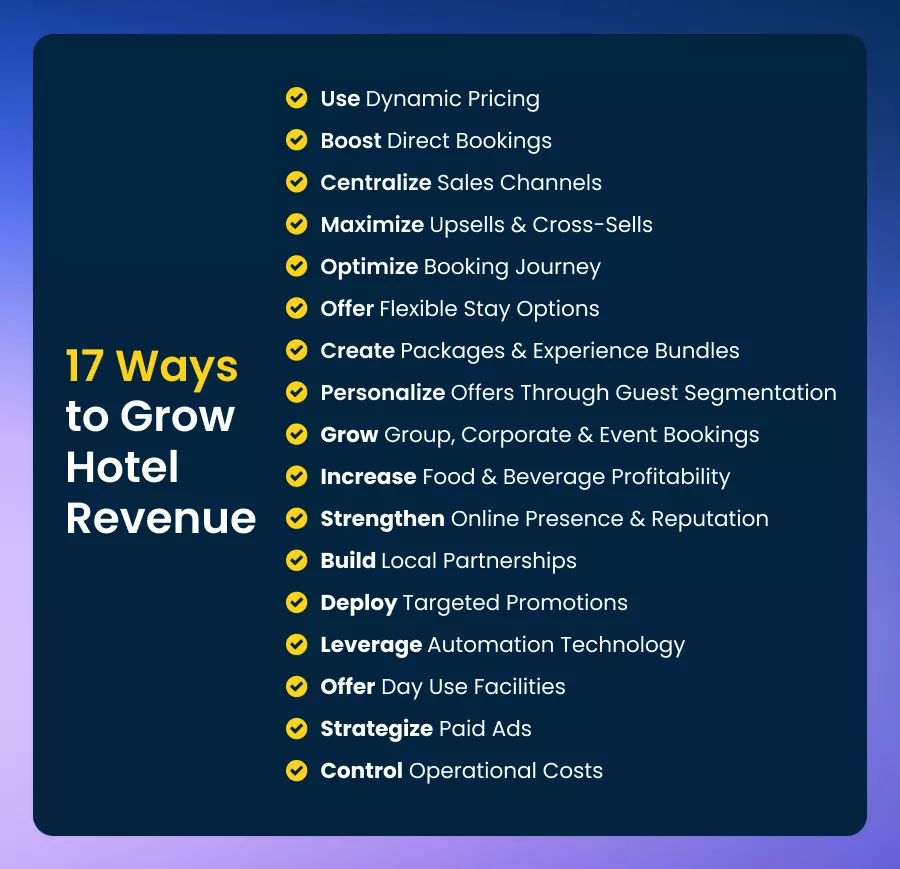
Top 17 Ways to Increase Hotel Revenue in 2026
Want to crack the code on how to improve hotel revenue? You’ll need to go beyond the basics. Smarter technology, sharper strategies and a guest-first mindset are all a must. Increasing revenue per available room (RevPAR) comes down to optimizing every channel, touchpoint and opportunity regardless of your property’s size.
1. Implement Dynamic Pricing and Demand Forecasting
Adapting to the times means adjusting your pricing strategy to meet your demand. To stay competitive, top-performing hotels use dynamic pricing tools and forecasting models to adjust rates in real time. These change rates are based on booking pace, local events and market conditions.
This year, using AI-driven rate management and integrating nontraditional data sources (airfare searches, regional weather and web traffic) will help you lead the pack. Automating this process will help you make smarter pricing decisions and earn higher revenue without increasing staff workload. Here’s how to get started:
Adjust rates daily (or even hourly) based on real-time demand: Track booking pace, reservation by room type, lead times and cancellation trends to understand guest preferences.
Integrate pricing tools with your PMS and booking engine: Connect revenue management tools to your Property Management System (PMS) and booking engine so rates update without lag.
Monitor competitor rates, but prioritize your own performance metrics: Take competitor pricing into account, but anchor decisions in your own data.
2. Increase Direct Bookings to Reduce OTA Commissions
Online Travel Agencies are great for visibility, but their 15-25% commission fees can significantly affect your bottom line. To master direct booking, guide guests to make reservations directly via your website, email campaigns or loyalty programs.
Not sure how? Clear ways to add value, like exclusive packages, complementary perks and special offers create strong incentives to book directly. Here are some tips:
Promote a best-price guarantee: Advertise special direct booking rates on your website to reassure guests they won’t find a better deal elsewhere.
Offer exclusive perks: Give guests who book direct special benefits, like early check-in or room upgrades, to give them a tangible reason to book directly.
Re-engage website visitors: Use retargeting ads to re-engage travelers who abandon the booking process so they complete their reservation on your site.
3. Make Every Sales Channel Work Together
It’s easy to let your various hotel sales channels (website, OTAs and Global Distribution Systems) fall into silos. Putting them all in one place makes it easier to maintain rate parity, avoid overbookings and see a 360-degree view of your hotel’s performance.
A centralized revenue strategy improves consistency and minimizes missed opportunities. When every team across the property works with the same goals and data, you get better forecasting and more agile revenue decisions. To get there, start with these steps:
Integrate your sales platforms: Pull data from your Central Reservation System or PMS to eliminate conflicting rates, reduce manual work and capture bookings correctly.
Set shared Key Performance Indicators across departments: Align your team around common KPIs like RevPAR, Average Daily Rate and direct booking share so everyone is on the same page.
Automate reporting to compare profitability: Consolidate your channel reporting to see which platforms deliver the best ROI to inform choices about resource allocation.
4. Maximize Upsells, Cross Sells and Bookable Services
Room upgrades, late checkouts and in-room extras are simple ways to boost the bottom line when presented at the right moment. One industry analysis found that a well‑executed upselling strategy (like pre‑arrival offers or targeted ancillary options) typically converts at over 6%, lifting revenue from each converted guest by 14% on average. That combination can translate into about a 2.7% bump in gross operating profit.
A hotel upsells platform like Canary’s Dynamic Upsells does this automatically by surfacing relevant offers during booking and throughout the stay. For example, a limited-service property can automatically offer early check-in or parking, while a resort may offer spa treatments or cabana rentals. To unlock more value from each stay:
Offer add-ons at multiple guest touchpoints: Tailor upsell offers to each stage of the guest journey, such as offering early check-in before arrival and in-room upsells during the stay.
Design offers based on guest data: Use information, such as why guests are traveling or who is in their party, to customize add-on offers accordingly.
Highlight value in every upsell: Use an upselling solution that makes it easy to add details so guests understand the add-ons that are available
5. Enhance Conversion Points Across Your Digital Booking Journey
If your booking engine is clunky, slow or confusing, there’s no doubt you’re losing revenue. Guests expect a seamless, mobile-first booking experience with minimal friction. Optimize every step, from room selection to payment confirmation, to prevent drop-off.
Audit your current journey and identify drop-off points. Then, test improvements like autofill, trust badges, mobile optimization and instant confirmation messaging. Here are a few quick wins:
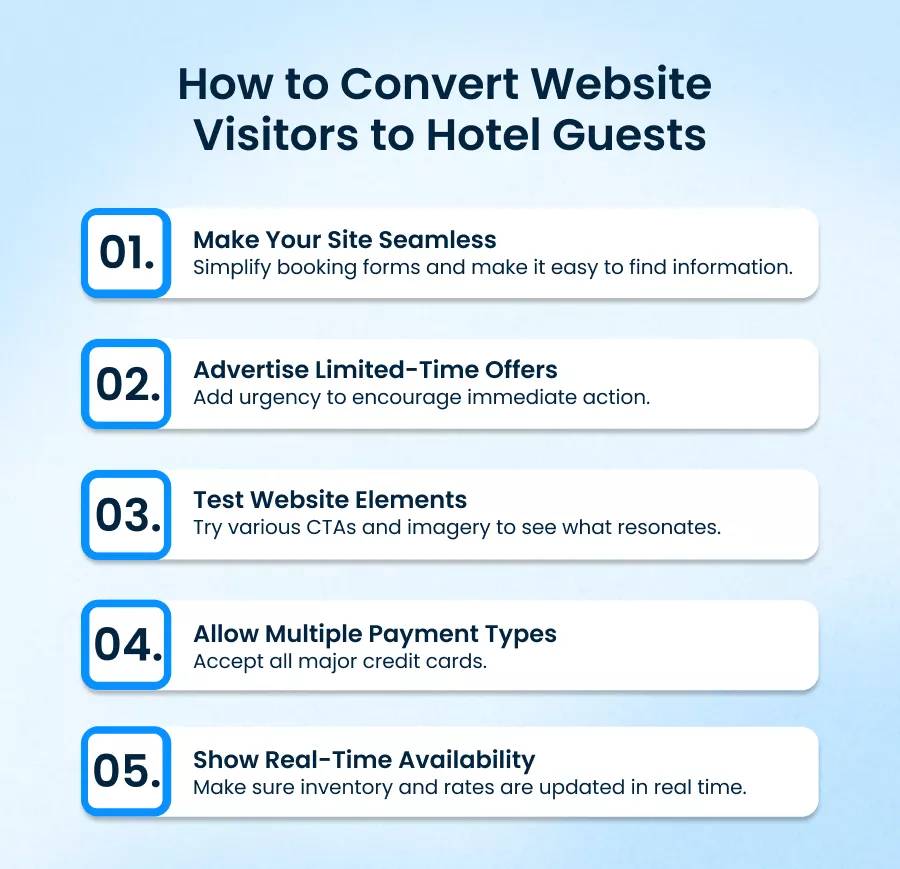
Simplify booking forms and reduce steps: Cut unnecessary fields and make the process as frictionless as possible. Fewer clicks mean fewer chances for guests to abandon.
Utilize time-sensitive offers: Highlight offers tied to seasons or specific events to encourage immediate action.
Test website elements for engagement: Experiment with wording, colors and visuals to see what drives more bookings.
Offer flexible payment options: Allow guests to pay via multiple methods or split payments, catering to different preferences and reducing drop-off at checkout.
Display real-time availability: Show live room inventory and accurate rates to avoid frustration and last-minute cancellations.
6. Offer Flexible Stay Options
Flexibility is currency. Guests want options, like early check-in and split stays, and they’re willing to pay for them. Thanks to hospitality AI, many hotels now offer personalized stay options that match guests' schedules and preferences.
These micro-revenue moments not only increase profitability but also improve satisfaction and reduce front desk bottlenecks. Here are a few flexible stay options that drive additional revenue:
Let guests pre-select early check-in/late checkout (for a fee)
Introduce half-day or work-from-hotel booking options
Use AI to match flexible offerings to traveler profiles
7. Create Compelling Packages and Experience-Based Bundles
Hotels don’t just sell rooms — they also sell an experience. Creative bundles (like romance packages, local food tours or spa + room combos) attract guests looking for a memorable time. These give you an opportunity to price strategically and stand out from the competition.
The key is relevance. Tailor packages to seasonality, traveler type and current trends (e.g., wellness, remote work, culinary travel). Ways to do this include:
Promoting limited-time seasonal packages on social media
Partnering with local vendors to build authentic experiences
Bundling services like breakfast, massage or airport transfers
8. Personalize Offers Through Smarter Guest Segmentation
Your guests aren’t all the same…so your offers shouldn’t be either. Use your guest management system to identify guests by behavior, demographics and booking patterns. Then, personalize pre-stay offers, email promotions and on-property upsells accordingly.
Doing this improves conversions, builds loyalty and increases guest spend over time. Here are a few ways to tailor your outreach to different types of travelers:
Send business travelers weekday offers and early check-in promos: Tailor offers to include early check-in, late checkout or bundled services like meeting room access.
Offer families room bundles or attraction passes: Families respond to packages that simplify planning and add value, like bigger rooms, free breakfasts and tickets to local attractions
Trigger automated campaigns based on visit history: Segment travelers by frequency, preferences or spending habits so you can send tailored offers to returning guests.
9. Grow Group, Corporate and Event Bookings
Did you know that group and corporate travel is often more profitable than leisure bookings? To grow this sector of your business, you’ll want to target these segments through tools made for corporate bookings, event planner partnerships and proactive outreach.
Offer dedicated booking portals, loyalty perks or custom event packages to make your property the easy choice for planners. To capture more group and event business:
Optimize your site with a dedicated group/event booking page: Include clear, detailed and easy-to-find information on everything event planners might need to know about your meeting spaces.
List your hotel on corporate Request for Proposals (RFP) platforms: Using a tool like the Cvent Supplier Network can expose you to more corporate and association planners who rely on RFP platforms to compare venues quickly.
Offer fast responses and tailored packages for planners: Respond quickly to inquiries and provide custom proposals that fit their specific event requirements. It builds trust and positions your hotel as a reliable partner.
10. Increase Food and Beverage Profitability
With the right strategies, F&B can be one of your most profitable departments. Focus on reducing waste, streamlining service and offering creative experiences that attract locals as well as guests.
Think beyond standard menus. Chef’s tables, seasonal tasting menus and interactive culinary experiences enhance the guest experience and give your property a unique selling point. Digital menus highlight these offerings, making it easy for guests to discover add-ons and drive higher spend without overcomplicating kitchen operations. Practical ways to boost your F&B revenue include:
Adding digital ordering tools for seamless ordering and additional spending
Holding happy hours or themed events to bring in local traffic during off-peak times
Promoting room service and in-room dining through digital compendiums and other collateral
11. Strengthen Online Presence, Reviews and Reputation
Online reviews can make or break your bookings. In fact, a 1-star rating difference can impact bookings by up to 20%. This is why you should make reputation management a priority by responding to feedback, addressing issues promptly and proactively collecting reviews.
A strong reputation builds trust and boosts your ranking on OTAs and Google. Here are a few ways to strengthen your online presence and guest perception:
Automate review requests post-stay: Trigger emails or app notifications immediately after checkout, making it easy for guests to leave feedback while their experience is fresh.
Respond to all reviews, especially the negative ones: Address complaints professionally, offer solutions and highlight how you’re improving to build trust for future guests.
Monitor sentiment trends to guide operational improvements: Analyze review data to identify recurring issues or areas for enhancement to proactively improve service and guest satisfaction.
12. Build Local Partnerships to Attract New Audiences
Winery tours, surf lessons or food delivery partnerships can really set your hotel apart (and drive revenue!). By collaborating with local businesses and cross-promoting services, you’ll expand your reach and enhance your guest experience.
Local relationships also build community credibility, which is something that matters to many types of travelers. Here are a few ways to make local collaborations work for you:
Co-create content with local tour operators or chefs: Highlight unique experiences in blogs, social posts or email campaigns to inspire guests and drive bookings.
Offer guests discounts at partner restaurants or attractions: Packages that include perks or bundled activities encourage longer stays and higher spend.
Host local events to bring new customers to your property: Pop-up dinners, workshops or tastings attract locals who may return for stays or spread word-of-mouth.
13. Deploy Targeted Campaigns for Low Seasons
Timing is everything when you’re wondering how to increase hotel revenue in low season. Look at past performance data to identify your soft periods, then launch targeted email, social and Pay-Per-Click campaigns focused on meaningful incentives.
Consider bundling amenities, offering limited-time discounts or targeting more local travelers with last-minute promotions. To make the most of your low-season marketing:
Promote midweek and off-season packages
Incentivize longer stays with offers like “Stay Three, Pay Two”
Reward past guests with seasonal loyalty perks
14. Leverage Hotel Technology and Automation
Modern hotel tech is a game-changer. The right tools let your team do more with less while improving the guest experience. And in 2026, that’s the kind of convenience guests expect.
Solutions like luxury hotel technology allow hotels to personalize the stay, reduce operational workload and uncover new revenue opportunities. Here’s how to put it to work:
Use mobile check-in to reduce front desk friction: Guests appreciate seamless entry, and staff can focus on service rather than admin tasks.
Automate upsell offers based on real-time room inventory: Dynamic prompts for room upgrades, spa services or F&B add-ons capture additional revenue without manual effort.
Digitize receipts, contracts and tipping: Streamlined operations improve accuracy, save staff time and encourage additional spend through easier transactions.
15. Improve Parking, Day Use and On-Property Access
Parking, day-use rooms and luggage storage are underutilized, but they can bring in real earnings. Consider offering non-traditional guests (e.g., remote workers, cruise travelers) paid access to these services to fill downtime between stays.
Smart packaging and digital access control let you monetize these assets without complicating operations. Here’s where to start:
Offer pre-paid parking or valet services: Provide convenience and certainty for guests while boosting ancillary income.
Promote day-use rooms on aggregator platforms: Capture travelers seeking short-term stays or workspaces during the day.
Use keyless access for streamlined entry to amenities: Digital locks and QR codes simplify access, making it easier to monetize community areas like gyms, lounges or co-working spaces.
16. Use Paid Advertising Strategically to Drive High-Value Bookings
Digital ads only work when they’re targeting the right travelers. Invest in potential guests who are about to make a booking and are searching for your destination or brand name. You can also re-engage people who’ve already visited your site or stayed with you before.
Track every campaign by revenue (not just clicks!) and double down on the ones that drive bookings. Here are a few ways to use ads strategically and boost bookings:
Use branded search to capture direct bookings: Ensure travelers searching for your hotel find your website first, reducing OTA commissions.
Launch geo-targeted ads to drive last-minute traffic: Pinpoint travelers near your property or in key markets with timely offers to fill unsold rooms.
Use guest data to identify people likely to book: Leverage past stay behavior, loyalty members and segmented lists to deliver personalized, high-conversion ads.
17. Control Labor and Operational Costs to Protect Profit Margins
You’re beating back rising wages, energy costs and supply chain delays, so it’s vital to control hotel operating costsif you want to see real growth.
Smarter staffing, automation and better resource tracking can reduce waste and boost efficiency without sacrificing service. To protect your bottom line:
Track utility and labor costs per occupied room: Monitor efficiency metrics closely to find areas where you can reduce waste and optimize staffing.
Automate housekeeping schedules based on occupancy: Match cleaning and service resources with actual demand to cut unnecessary labor hours.
Digitize check-in, payments and guest messaging: Streamlining admin tasks reduces staff workload and allows your team to focus more on revenue-generating activities.
Increase Hotel Revenue with Solutions from Canary
According to IDeaS, 67% of hotel owners and investors say having the right technology will have a high or very high impact on profitability. Canary’s end-to-end Guest Management System gives you the tools to increase revenue at every touchpoint, from pre-arrival upsells to seamless mobile checkouts.
Canary delivers measurable impact when it comes to increasing direct bookings, optimizing upsell opportunities and digitizing operations to reduce overhead. Trusted by more than 20,000 hotels in 100+ countries, Canary’s award-winning platform is built to help your team operate more efficiently and maximize profitability while satisfying your guests. It’s hotel revenue management done right.
Use Canary to:
Drive up to 250% more upsell revenue with Dynamic Upsells
Convert more direct bookings with a faster, mobile-first experience
Boost guest satisfaction with Mobile Check-In, Smart Checkout and Digital Tipping
Automate guest communication with AI-powered messaging
Eliminate paper processes with Digital Authorizations and Contracts
Capture more revenue with personalized offers and segmentation tools
Book a demo today and learn how to increase hotel revenue and enhance overall guest experience with solutions from Canary.
Frequently Asked Questions
What is the most profitable revenue stream for hotels today?
Room revenue remains the most profitable stream for most hotels due to high margins and relatively fixed costs. However, upsells, early check-in fees and personalized add-ons are growing rapidly as hoteliers adopt digital tools to increase guest spend per stay.
How can hotel technology help to increase revenue?
Hotel tech streamlines operations, personalizes the guest journey and opens new revenue opportunities. Platforms like Canary offer tools for upselling, dynamic pricing, mobile check-in and automated guest messaging. These are all designed to increase conversions and drive incremental revenue across the guest lifecycle.
Is there a way to automate my hotel revenue streams?
Yes. With the right tools, many revenue-generating actions (i.e., upsell offers, flexible stay options, retargeting campaigns) can be automated. Hotel revenue management systems like Canary’s use AI to deliver timely, personalized offers that increase revenue with minimal lift from your team.